The power and speed of computer components has increased at a steady rate since desktop computers were first developed decades ago. Software makers create new applications capable of utilizing the latest advances in processor speed and hard drive capacity, while hardware makers rush to improve components and design new technologies to keep up with the demands of high-end software.
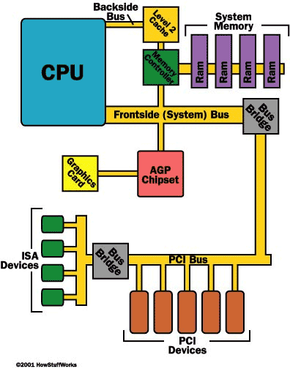
There's one element, however, that often escapes notice - the bus. Essentially, a bus is a channel or path between the components in a computer. Having a high-speed bus is as important as having a good transmission in a car. If you have a 700-horsepower engine combined with a cheap transmission, you can't get all that power to the road. There are many different types of buses.
Advertisement
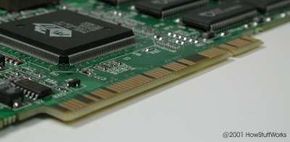
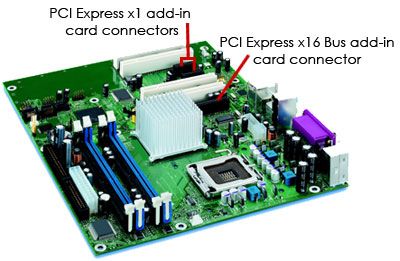
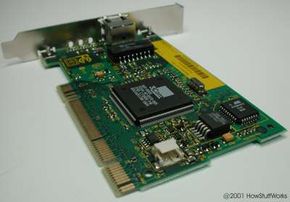
The idea of a bus is simple -- it lets you connect components to the computer's processor. Some of the components that you might want to connect include hard disks, memory, sound systems, video systems and so on. For example, to see what your computer is doing, you normally use a CRT or LCD screen. You need special hardware to drive the screen, so the screen is driven by a graphics card. A graphics card is a small printed circuit board designed to plug into the bus. The graphics card talks to the processor using the computer's bus as a communication path.
The advantage of a bus is that it makes parts more interchangeable. If you want to get a better graphics card, you simply unplug the old card from the bus and plug in a new one. If you want two monitors on your computer, you plug two graphics cards into the bus. And so on.
In this article, you will learn about some of those buses. We will concentrate on the bus known as the Peripheral Component Interconnect (PCI). We'll talk about what PCI is, how it operates and how it is used, and we'll look into the future of bus technology.
Advertisement