What is an IP address? Every machine on a network has a unique identifier. Just as you would address a letter to send in the mail, computers use the unique identifier to send data to specific computers on a network.
Most networks today, including all computers on the internet, use the TCP/IP protocol as the standard for how to communicate on the network. In the TCP/IP protocol, the unique identifier for a computer is called its IP address.
Advertisement
There are two standards for IP addresses: IP Version 4 (IPv4) and IP Version 6 (IPv6). All computers with IP addresses have an IPv4 address, and most use the new IPv6 address system as well. Here are the differences between the two address types:
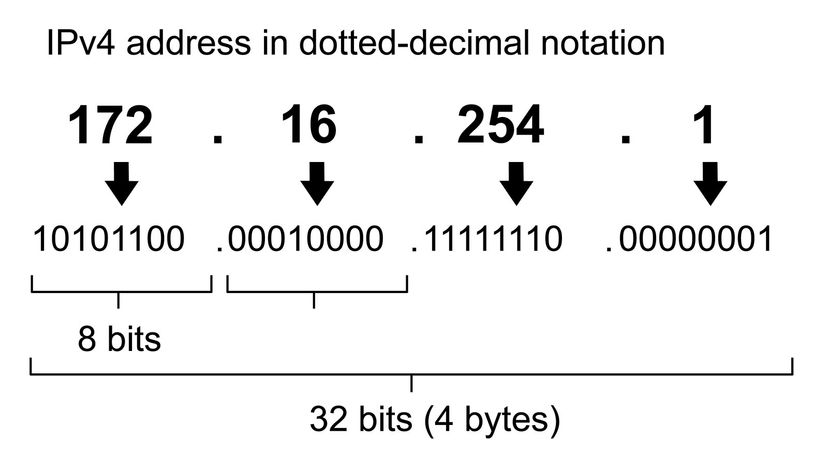
- IPv4 uses 32 binary bits to create a single unique address on the network. An IPv4 address is expressed by four numbers separated by dots. Each number is the decimal (base-10) representation for an eight-digit binary (base-2) number, also called an octet. For example: 216.27.61.137
- IPv6 uses 128 binary bits to create a single unique address on the network. An IPv6 address is expressed by eight groups of hexadecimal (base-16) numbers separated by colons, as in 2001:cdba:0000:0000:0000:0000:3257:9652. Groups of numbers that contain all zeros are often omitted to save space, leaving a colon separator to mark the gap (as in 2001:cdba::3257:9652).
At the dawn of IPv4 addressing, the internet wasn't the large commercial sensation it is today, and most networks were private and closed off from other networks around the world. When the internet exploded, having only 32 bits to identify a unique internet address caused concerns that we'd run out of IP addresses before long.
Under IPv4, there are 232 possible combinations, which offers just under 4.3 billion unique addresses. IPv6 raised that to a stress-relieving 2,128 possible addresses. Later, we'll take a closer look at how to understand your computer's IPv4 or IPv6 addresses.
Advertisement