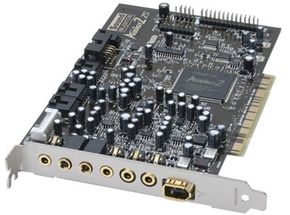
Before the invention of the sound card, a PC could make one sound - a beep. Although the computer could change the beep's frequency and duration, it couldn't change the volume or create other sounds.
At first, the beep acted primarily as a signal or a warning. Later, developers created music for the earliest PC games using beeps of different pitches and lengths. This music was not particularly realistic -- you can hear samples from some of these soundtracks at Crossfire Designs.
Advertisement
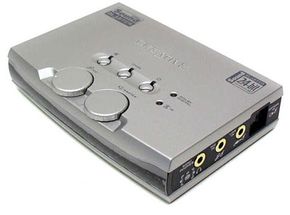
Fortunately, computers' sound capabilities increased greatly in the 1980s, when several manufacturers introduced add-on cards dedicated to controlling sound. Now, a computer with a sound card can do far more than just beep. It can produce 3-D audio for games or surround sound playback for DVDs. It can also capture and record sound from external sources.
In this article, you'll learn how a sound card allows a computer to create and record real, high-quality sound.
Advertisement