Other Sound Card Components

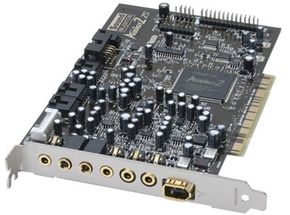
In addition to the basic components needed for sound processing, many sound cards include additional hardware or input/output connections, including:
  • Digital Signal Processor (DSP): Like a graphics processing unit (GPU), a DSP is a specialized microprocessor. It takes some of the workload off of the computer's CPU by performing calculations for analog and digital conversion. DSPs can process multiple sounds, or channels, simultaneously. Sound cards that do not have their own DSP use the CPU for processing.

  • Memory: As with a graphics card, a sound card can use its own memory to provide faster data processing.

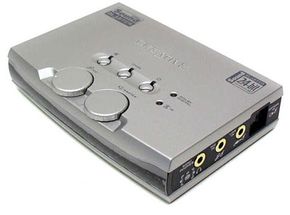
  • Input and Output Connections: Most sound cards have, at the very minimum, connections for a microphone and speakers. Some include so many input and output connections that they have a breakout box, which often mounts in one of the drive bays, to house them. These connections include:
    • Multiple speaker connections for 3-D and surround sound
    • Sony/Philips Digital Interface (S/PDIF), a file transfer protocol for audio data. It uses either coaxial or optical connections for input to and output from the sound card.
    • Musical Instrument Digital Interface (MIDI), used to connect synthesizers or other electronic instruments to their computers.
    • FireWire and USB connections, which connect digital audio or video recorders to the sound card


Photo courtesy HowStuffWorks Shopper
A PCI sound card

Next, we'll look at integrated motherboard and external sound control options.

Drivers & APIs
Like a graphics card, a sound card uses software to help it communicate with applications and with the rest of the computer. This software includes the card's drivers, which allow the card to communicate with the operating system. It also includes application program interfaces (APIs), which are sets of rules or standards that make it easier for software to communicate with the card. The most common APIs include:
  • Microsoft: DirectSound
  • Creative: Environmental Audio Extensions (EAX) and Open AL
  • Sensaura: MacroFX
  • QSound Labs: QSound