The invention of the hard disk drive in 1956 marked a revolutionary leap in data storage technology. Developed by IBM engineer Reynold B. Johnson and his team, the first hard disk drive was known as the IBM Model 350 Disk File, part of the IBM 305 RAMAC computer system. This groundbreaking device utilized magnetic disks for data storage, allowing for rapid access to large amounts of information compared to the sequential access of tape drives.
The original unit was as large as two refrigerators and stored a mere 5 megabytes of data on fifty 24-inch disks. Over the decades, HDDs have evolved dramatically in terms of capacity, size, and speed, significantly shaping the landscape of modern computing and data management.
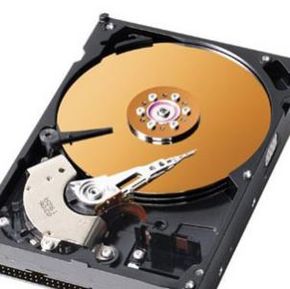
Hard disks started as large disks up to 20 inches in diameter holding just a few megabytes. They were originally called "fixed disks" or "Winchesters" (a code name used for a popular IBM product). They later became known as "hard disks" to distinguish them from "floppy disks." Hard disks have a hard platter that holds the magnetic medium, as opposed to the flexible plastic film found in a tape and floppy disk.
At the simplest level, a hard disk is not that different from a cassette tape. Both hard disks and cassette tapes use the same magnetic recording techniques described in How Tape Recorders Work. Hard disks and cassette tapes also share the major benefits of magnetic storage — the magnetic medium can be easily erased and rewritten, and it will "remember" the magnetic flux patterns stored onto the medium for many years.
In the next section, we'll talk about the main differences between cassette tapes and hard disks.