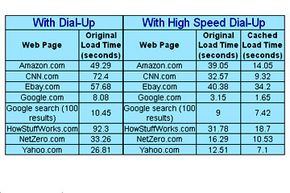
While surfing the Internet, do you find yourself going to get a cup of coffee, grab a magazine or retile your bathroom between page loads? If so, chances are you're using a dial-up connection, and a sneaking suspicion may be growing on you: Is your connection actually getting slower?
It is and it isn't. As always, the connection speed of dial-up is limited by the bandwidth of phone lines; but at the same time, the average file size for Web content is getting larger and larger. More people are using broadband connections that can handle a bigger load, so Web sites feel more comfortable bulking up their pages. It takes a lot time to squeeze all of that data through a dial-up connection.
Advertisement
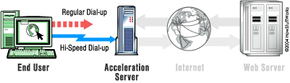
New technology offers a solution to the slow-down that doesn't necessitate broadband. Services like NetZero and EarthLink are now offering "high-speed dial-up." According to ads for these services, you can get connection speeds that are five times faster than traditional dial-up service.
When you think of dial-up Internet service, the first thing that probably comes to mind is the strange sort of "R2-D2 in a blender" type chirping that the modem makes as it connects. This song is called the handshake protocol, and it is the first thing that bogs down the speed of dial-up Internet.
The handshake protocol, as the name implies, begins the conversation that allows data to be sent to and from your computer using the Internet. There are actually two separate handshakes that occur in this process. The first half is the modem initializing the Internet connection. We'll call that the modem handshake. The second part is the software handshake. That deals with authenticating the user's access to the ISP (Internet Service Provider). When your computer is chirping away, it is introducing itself to your ISP. High-speed dial-up providers can't do anything about the modem handshake, but they can speed up the software handshake.
On the next page learn about the standard software handshake and how it can be accelerated.
Advertisement