When it started in 2003, Second Life (SL), the three-dimensional virtual world where users can pretend to be whomever — or whatever — they want to be, got tons of attention. Although it's an online environment, its influence reaches into the real world — including a virtual economy that's dependent upon actual money. In reality, or perhaps virtual reality, Second Life is a complex environment filled with potential risks and rewards.
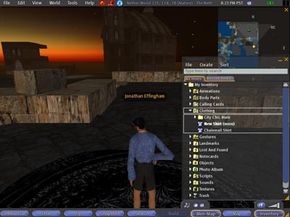
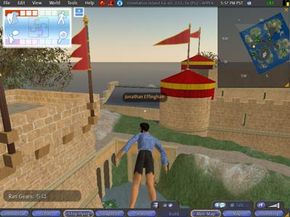
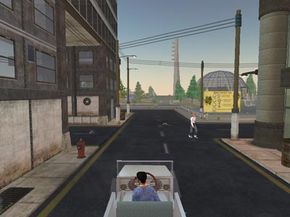
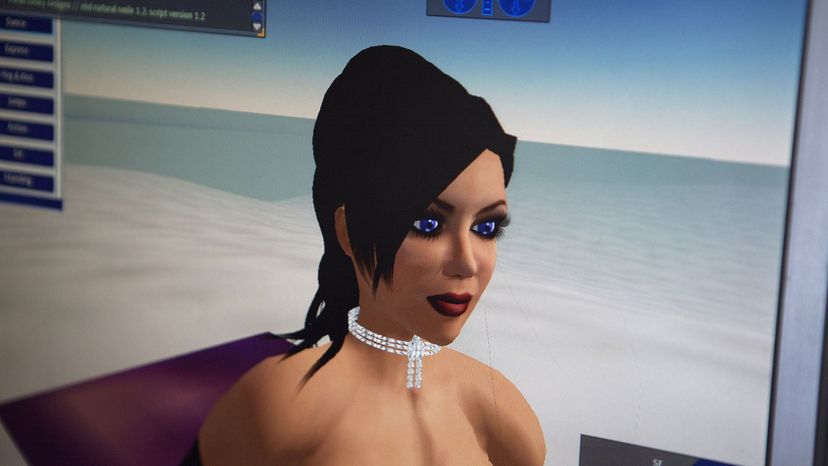
At its most basic level, Second Life is an online environment created by Linden Lab, a company based in San Francisco. Second Life is an online world in which users (called residents) create virtual representations of themselves, called avatars, and interact with other avatars, places or objects.
Advertisement
Second Life isn't just a fancy chat room — residents can do much more than communicate with one another. For one thing, they can contribute to the world around them, creating buildings, objects or even animations. Resident additions to the virtual world are called user-generated content, and this content is one of the factors that makes Second Life such a unique online environment. User-generated content also explains why Second Life is for adults only — Linden Lab places few restrictions on residents, meaning that you can see some pretty raunchy creations while you're exploring the environment.
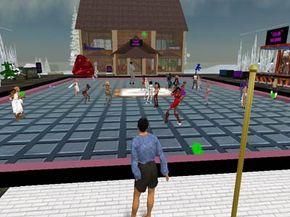
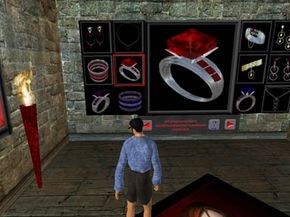
In Second Life, residents can go to social gatherings, live concerts, press conferences and even college classes. They can do a lot of things you can do in real life — buy land, shop for clothes and gadgets, or just visit with friends. They can also do things that are impossible in the real world — avatars can fly or teleport to almost any location. Some residents design short programs, called scripts, which give avatars or objects new abilities, including special animations or the ability to generate copies of other objects.
In many ways, Second Life is similar to massively multiplayer online role playing games (MMORPGs). Like an MMORPG, users represent themselves with a customizable, 3D figure that acts like a computer-generated puppet. Users navigate through an online world, encountering strange landscapes and new people. Unlike MMORPGs, residents in Second Life aren't in a game, though there are games inside Second Life's virtual environment. They inhabit a virtual world free of pre-determined goals or tasks, just like the real world.
Second Life was a huge hit in the mid-2000s, though interest has waned since then. In 2018, it was reported to have 500,000 active monthly users (down from more than 1 million in 2013) [source: Buscemi]. But registration picked up in 2020, because of the COVID-19 pandemic keeping people at home. So, whether you're a former or current user or just curious about Second Life, we'll explain to you how it all works.
Advertisement